Radon Testing
Test. Understand. Fix. Verify.
Invisible and odorless, radon is common in Indiana. Our professional test takes 48 hours under closed-house conditions and gives you clear results with easy-to-follow next steps. If levels are 4.0 pCi/L or higher, we’ll create the right solution for your home and test again after remediation to make sure the levels go down.
Found in all 92 counties; roughly 1 in 3 Indiana homes test at or above the EPA action level.
Serving West Central Indiana since 2007 · Professional 48-hour test, lab-verified results.
Quick Prep (12 Hours Before We Arrive)
We will schedule a 48-hour test and explain what “closed house” conditions mean, including keeping windows closed, using doors only for normal entry and exit, running your HVAC as usual, and not using whole-house fans. Start these conditions at least 12 hours before the test and keep them in place until the test ends.
Monitor Placement (Lowest Livable Level)
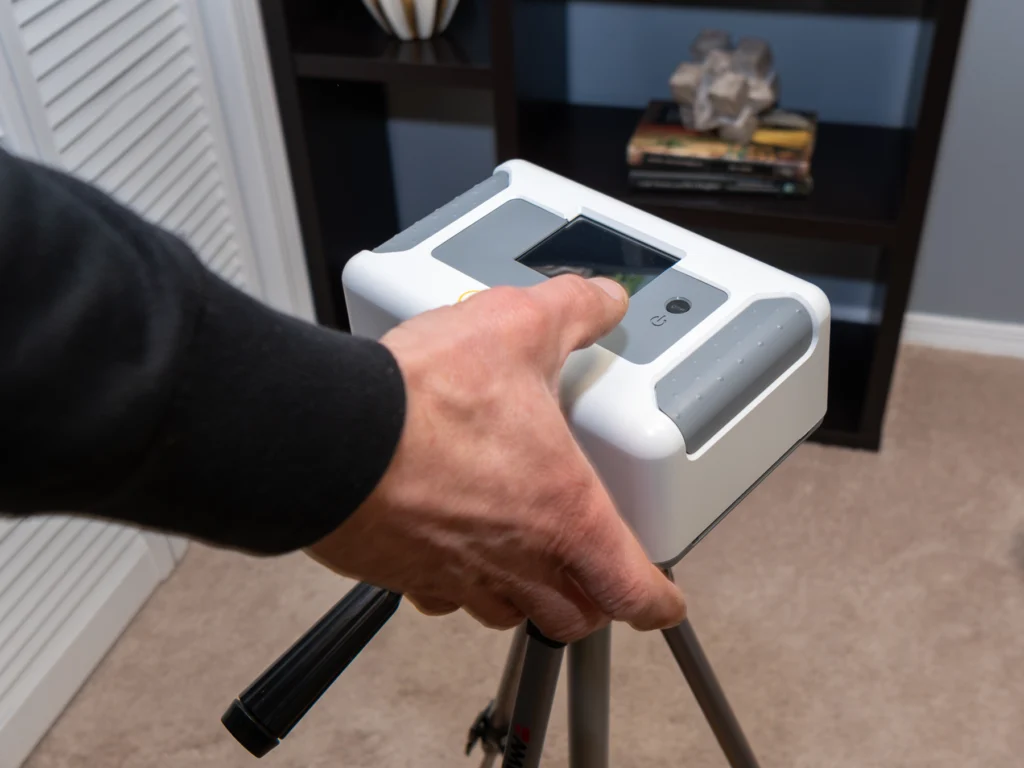
We place a calibrated continuous monitor on the lowest livable level of your home, at breathing height. We ensure it is positioned away from drafts, exterior walls, sumps, kitchens, bathrooms, and direct heat sources to get an accurate reading.
48 Hours of Everyday Living
You can continue your regular routine during the test. If any details might affect the readings, such as severe storms or unusual ventilation, we will check with you and make adjustments if needed.
Clear Results + Next Steps
After the test, we collect the monitor and provide your average pCi/L result along with a clear summary. We will also explain the next steps.
- Under 2.0 pCi/L: That’s great. Record the result and plan to re-test about every 2 years.
- 2.0-3.9 pCi/L: You may want to consider mitigation. We will talk with you about the risks and your options.
- Over 4.0 pCi/L: We recommend mitigation. We will design the right system for your home, test it, and then verify that the level drops as expected.
Have questions about why “closed house” matters or where we place the monitor? We’ll cover it on-site and in your summary.
DIY Short-Term Kit (Good First Screen)
- Available at most home-improvement big box stores (and online).
- A quick and affordable way to get your number before choosing the next steps.
- To get accurate results, carefully follow the kit's instructions and keep your home closed up as directed. Be sure to send the kit to the lab right away.
- Remember: there's no such thing as a "false positive" with radon. If your result is elevated, consider a follow-up with a professional 48-hour test ($140) to confirm results and make informed decisions.
Closed House Conditions (Quick Checklist)
To ensure your 48-hour test is accurate, please keep your home closed from 12 hours before the test until it’s completed. Here’s what to do:
- Windows closed. Use doors only for regular entry and exit.
- HVAC on as usual. Avoid using whole-house fans or window AC units that pull outside air.
- No big ventilation changes. Don't run attic/whole-house exhaust continuously.
- Fireplaces sealed/not in use.
- Go about your regular routine. Cook, shower, and come and go as normal.
Why it matters:
Keeping your home closed helps the test measure your usual radon exposure, not just a temporary change from extra ventilation.
Our Equipment & Quality Controls
Continuous Radon Monitor
Annually calibrated Continuous Radon Monitor (CRM): Professional, NRPP/AARST-recognized continuous monitor with current calibration.
Ambient and Tamper Logging
Our devices record barometric pressure, temperature, power, or tilt events, and movement. This helps make sure your results are accurate and reliable.
Chain-of-custody reporting
Documented start/stop times, test conditions, placement notes, and result summary in a homeowner-friendly report.
Closed house coaching
We explain what to expect ahead of time so your test shows your usual exposure, not just a rare change in ventilation.
Post-Test Verification
If mitigation is needed, we re-test to confirm the reduction and advise on periodic re-testing.
Understanding Your Result (pCi/L)
Under 2.0 pCi/L: Keep it low.
Log your result and re-test about every 2 years (or after renovations, foundation work, or HVAC changes). Lower is always better.
2.0-3.9 pCi/L: Consider mitigation.
Risk increases as both the level and the length of exposure go up. Many homeowners decide to mitigate at this stage, especially if there are young children, people spend a lot of time at home, someone smokes indoors, or you plan to finish a basement. If you want to double-check, we can run a follow-up test to confirm your seasonal average.
4.0 pCi/L or higher: Mitigation recommended.
We’ll design a right-sized sub-slab (SSD) or sub-membrane (SMD) system and schedule a post-test to verify the drop. Most homes see significant reductions within 24–48 hours of activation.
Why numbers change:
Frequently Asked Questions
Can I tell my radon level from a map or a neighbor's result?
No. Radon varies house-to-house and season-to-season. Maps show potential, not your actual number. Testing is the only way to know for sure.
Do I need to test if I don't have a basement?
Yes. Slab-on-grade and crawlspace homes can test high for radon. The only way to know your level is to test.
What are "closed house" conditions, and why do they matter?
Keep windows closed for 12 hours before and during the 48-hour test (normal entry/exit is fine). This makes results reliable and comparable to EPA guidelines.
Will the weather affect my test?
Storms and pressure changes can shift hourly readings. Continuous monitors log those variations, and we interpret the data so your average is meaningful.
Can I use a DIY kit?
Yes. Short-term kits sold at most home center retailers are a good first screen. There’s no such thing as a “false positive” with radon. If a DIY result is elevated, confirm with a professional test so you can act with confidence.
Where do you place the monitor?
Following EPA best practices: on the lowest livable level, at breathing height, away from drafts, kitchens and baths, sumps, and exterior walls.
How much is a professional radon test?
$140 for a 48-hour continuous monitor test under closed-house conditions. That includes a calibrated device, lab-verified results, and a plain-English summary with next steps. If levels are high, we’ll outline mitigation and a post-test to confirm the drop.
How do I interpret results?
- Under 2.0 pCi/L: Great result. Log it and re-test about every 2 years.
- 2.0-3.9 pCi/L: Consider mitigation, especially if anyone spends a lot of time on lower levels or if anyone is higher-risk.
- Over 4.0 pCi/L: Mitigation recommended. We’ll design the right system and verify the drop with a post-test.
How often should I re-test?
At least every 2 years, or after renovations, HVAC/foundation changes, or if you start using a lower level more. After mitigation, re-test 24–30 days later, then periodically.
Still have questions or a unique situation? We’re happy to talk it through with you.
Customer Reviews
Locally trusted since 2007.
Here’s what homeowners say about working with us.
Note: Some reviews mention our former names, Crawlspace Remediation and Radon Control Services. Both are now part of the Cut ‘N Dry Waterproofing family of services.
Want to see more feedback from local homeowners?
Ready to Know Your Number?
Schedule a 48-hour professional radon test for $140. We’ll set up the monitor for you, so you can continue your routine while your home stays closed. Once the test is done, you’ll get clear results and expert advice. If your radon levels are high, we’ll create a plan to fix it and check again to make sure the levels go down.