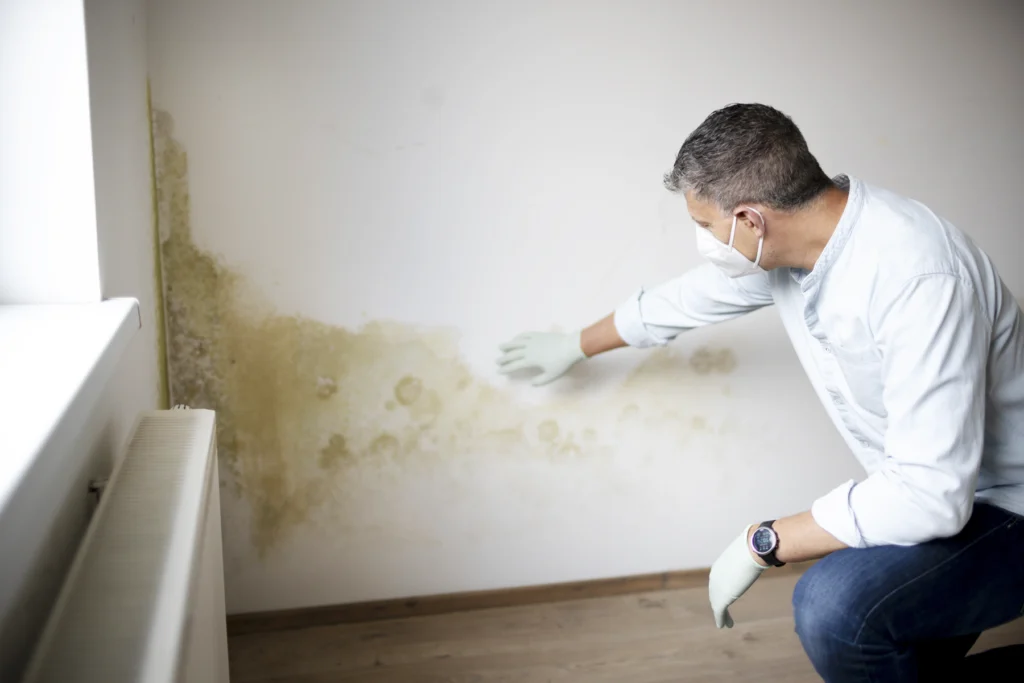
About Mold
What it is, why it shows up, and how to stop it.

What Is Mold & Why Does It Show Up in Indiana
- Moisture is the driver. Leaks, seepage, condensation, and high humidity all contribute to mold growth.
- Indiana factors. Include excess moisture from heavy rainfall, humid summer air, plumbing leaks, or poor drainage lingers in enclosed spaces.
- Below grade = higher risk. Basements and crawlspaces are areas where water and damp air collect; mold growth can also develop in attics with poor ventilation or when bath fans vent into these spaces.
Where Mold Hides
(and Early Clues)
Mold often grows out of sight in cool corners, behind finishes, or anywhere moisture lingers. Check these high-risk spots and watch for early clues:
Common Locations
- Crawlspaces: sill plates, joists, subfloor, insulation facing
- Basements: behind finished walls, rim joists, wall–floor (cove) joint
- Bathrooms & Laundry: cold corners, behind baseboards, around supply lines
- Attics: sheathing near bath/dryer vents; areas with past leaks or poor ventilation
- Around HVAC: returns, closet air handlers, condensate lines/pans
Early Signs
- Persistent musty odors that don't go away with cleaning
- Discoloration (spots/patches) on wood or drywall
- Condensation on walls, ducts, or windows
- Efflorescence (white powder) on masonry is evidence that moisture is moving through
- Allergy-like symptoms that improve when you leave the house
Tip: If you spot signs in more than one area, start with a Mold Inspection & Testing – we’ll confirm what’s mold vs. moisture staining and plan the next steps.
How Mold Moves Through Your Home
The Stack Effect + Airflow
When the temperature inside is different from outside, warm indoor air rises and leaves through the top of the house. This movement draws in replacement air from lower levels. The effect is strongest in winter when it’s warm inside and cold outside. In summer, it can weaken or even reverse direction, but air still travels along the same routes. If the air in your crawlspace or basement smells musty, those odors and microscopic spores can move into your living areas, even reaching rooms far from where they started.
What Carries It Upstairs
- Natural Stack Effect: Rising warm air draws make-up air from below grade.
- HVAC Circulation: Returns, leaky ducts, and closet air handlers can spread spores.
- Hidden Pathways: Rim-joist gaps, plumbing/electrical chases, stairwells, and wall cavities.
Why “Just Wiping It” Doesn’t Work
- Wiping can disturb growth and aerosolize spores.
- Porous materials (drywall, wood) hold roots/hyphae you can't reach from the surface.
- If moisture remains, new growth typically resumes in the same areas.
How to Stop the Cycle
Fix moisture at the source: With Cut 'N Dry solutions, including Crawlspace Repairs & Encapsulation, Drainage Control, Foundation Waterproofing, and Sump Pumps.
Remediation: Containment, HEPA filtration, source removal, and targeted antimicrobial treatment.
Tighten the pathways: Seal rim-joists and gaps; address leaky returns/ducts.
Optional, but recommended: Add CIMR after cleanup to reduce airborne spores and odors continuously.

Myth vs. Fact
Myth: “Bleach fixes mold.”
Fact: It may lighten stains on some surfaces, but it doesn’t reach porous materials or airborne spores, so problems return if moisture remains.
Myth: “Only black mold is harmful.”
Fact: Many molds can impact air quality and comfort; color isn’t a risk rating.
Myth: “A dehumidifier solves everything.”
Fact: Dehumidifiers help, but they don’t fix seepage, leaks, or structural moisture.
Myth: “Paint or sealant will trap it.”
Fact: Coatings can hide ongoing issues and may trap moisture behind surfaces. Mold remediation needs to be completed before any coatings are applied.
Next step: If you’re seeing stains, smelling mustiness, or dealing with recurring dampness, start with Mold Inspection & Testing. We’ll confirm what you’re facing and map out Mold Remediation, along with the right moisture control (including Crawlspace Repair & Encapsulation, Drainage Control, and Foundation Waterproofing).
When to DIY vs Call the Pros?
You don’t always need to call in a professional, but larger or recurring mold problems do require expert help. Here are some tips to help you decide.
DIY MOLD CONTROL
DIY may be okay when…
- The area is very small (~10 sq ft or less).
- The mold is only on non-porous surfaces (tile, metal, finished concrete).
- The moisture source has been fixed (no active leaks, seepage, or high humidity).
- The area is not in an HVAC system, an attic, or a crawlspace.
DIY Safety Basics
- Wear gloves, eye protection, and an N95 mask.
- Turn off or cover any nearby HVAC vents, and avoid using fans that could spread mold spores.
- Use detergent and water to clean hard, non-porous surfaces. For moldy items like wet cardboard or carpet, place them in a bag and dispose of them.
- Avoid sanding or scrubbing too hard; this can release mold spores into the air.
- Don't paint over active mold.
- Recheck in a week; if it returns, call a pro.
PROFESSIONAL MOLD CONTROL
Call a Pro When…
- The area is larger than 10 sq ft, keeps coming back, or you can't find the source.
- Growth involves porous materials (such as drywall, insulation, and subfloor) or hidden areas (behind finishes, wall cavities).
- Mold is found in HVAC components, attics, or crawlspaces, or develops after flooding.
- There are health sensitivities in the home (such as asthma, allergies, infants, and the elderly), or you may need documentation (for real estate or insurance).
URGENT: CALL IMMEDIATELY
- Sewage "black water" events, widespread flooding, electrical hazards, or strong musty odors spreading through the home.
Not sure? We’ll take a quick, no-pressure look, confirm what you’re seeing, find the source of moisture, and explain the next steps.
Frequently Asked Questions
Mold can be confusing. It’s hard to know what you can handle on your own, when to seek help, or how to prevent it from returning. Here are clear answers to the questions we hear most often.
Do different colors of mold matter?
Color varies by species and conditions; any active growth requires attention.
Can mold be completely removed?
We remove contaminated materials and clean the remaining surfaces; long-term success depends on addressing the moisture that caused the issue.
Is testing always required?
Not always. If growth is visible and the source is apparent, we can proceed with Mold Remediation. Testing is helpful when the scope is unclear, hidden growth is suspected, or documentation is requested.
How long does remediation take?
Most residential projects take 1–3 days, depending on size and access.
Will the mold come back?
Can I stay in my home during the remediation process?
What humidity level should I aim for?
Maintain indoor relative humidity at 40–50% (a seasonally reasonable level). After repairs, dehumidification helps maintain safe levels in basements and crawlspaces.
Do I need to throw away belongings with mold on them?
Non-porous items can often be cleaned; however, porous items like cardboard or fabrics may need to be thrown away if contaminated. We’ll guide you item-by-item.
Is CIMR necessary, and is it safe?
CIMR is optional, but we recommend it after remediation and moisture control. It works continuously to help reduce airborne spores and odors in your home.
Will insurance cover mold remediation?
Insurance coverage depends on your policy. Most plans do not cover mold unless it is caused by something like a burst pipe. We can help by providing the necessary paperwork for your claim.
What's the difference between mold and simple moisture staining?
Efflorescence is a chalky white mineral deposit left by moisture movement. Mold looks like raised or fuzzy discoloration and can smear when wiped. If you’re unsure, start with Mold Inspection & Testing.
If you still have questions, we are happy to check things out, explain the cause of the moisture, and walk you through your options. We never pressure you to decide.
Did You Know?
- The EPA advises consulting professional guidance when mold covers more than 10 square feet or there's significant water damage.
- Moldy, porous materials (such as ceiling tiles or carpet) are usually not cleanable and should be discarded. Clean hard surfaces with detergent and water, then dry them thoroughly.
- After materials become wet, dry them completely within 24–48 hours (or remove them) to prevent mold growth.
Don’t wait until it’s too late.