Radon Mitigation
Make an invisible risk a non-issue
Radon can’t be seen or smelled, but it can be dealt with. If your test results are high, the next step is simple: mitigation. Our mitigation systems use gentle suction below your home to capture radon before it enters your living space, then safely vent it above the roof. Installation is clean and discreet. Afterward, we run a 48-hour test to confirm the reduction and explain how and when to re-test. We focus on clear, reliable numbers you can trust.
How Radon Mitigation Works
Radon reduction works by creating gentle, steady suction under your home. This way, soil gas is collected and vented outside, above the roofline, before it can get into your living spaces. We tailor our approach to your foundation type.
Sub-Slab Depressurization (SSD) for Basements & Slabs
Sealing the easy leaks: We seal obvious slab and cove-joint gaps for more consistent suction.
Sealed collection point(s): We core a hole through the slab to create a suction pit and tie into the sealed, radon-compatible sump lid (when needed) to draw from the drain tile path.
Vent piping: Clean, code-compliant routing from the collection point up and out.
Quiet exterior fan: Mounted outside conditioned space (typically exterior wall or attic with outside discharge), pulling soil gas continuously.
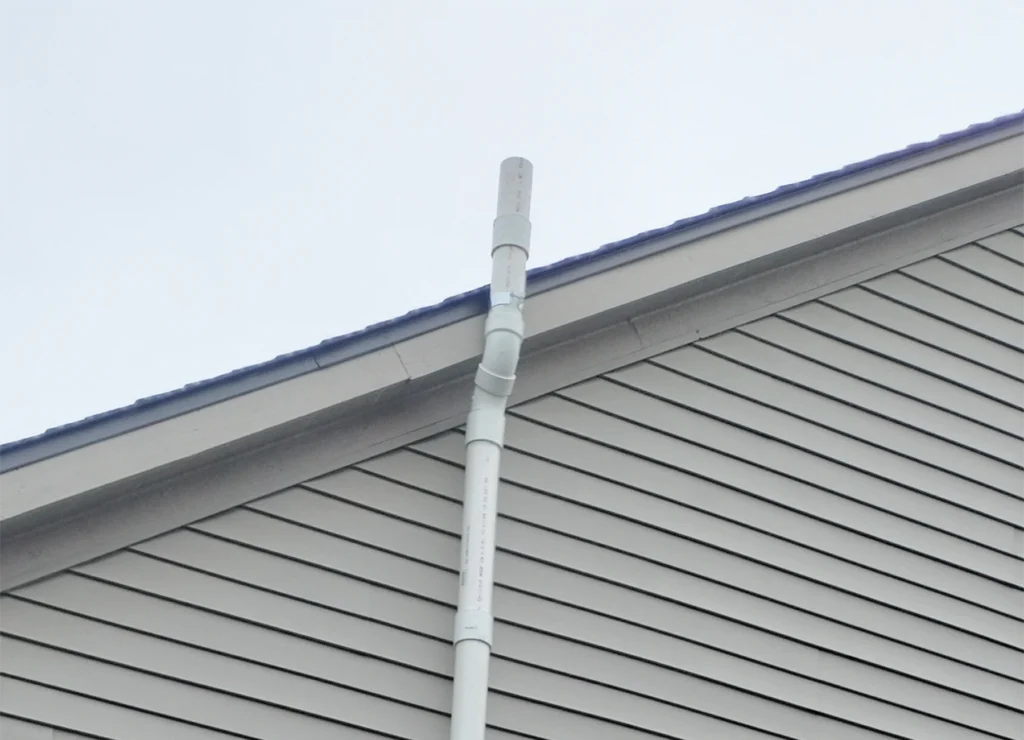
Discharge above roofline: Vented away from windows and openings for safe dilution outdoors.
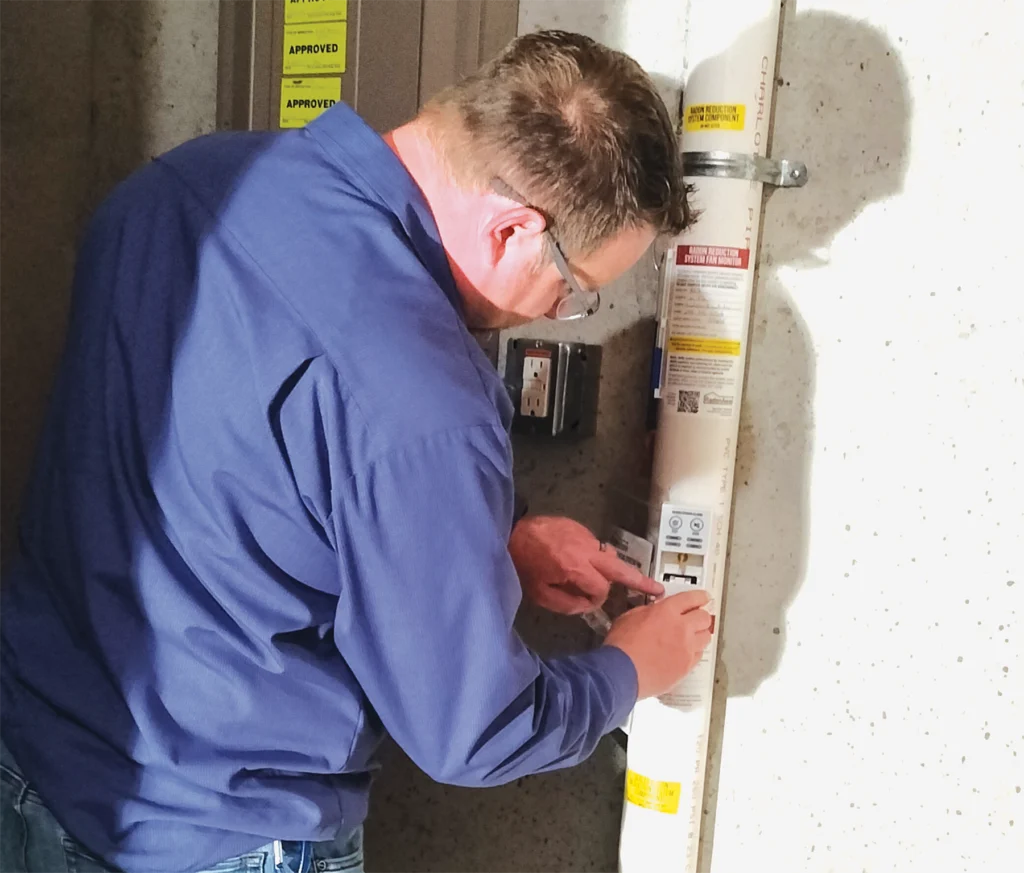
Simple status check: A U-tube manometer on the pipe shows suction at a glance; we can add an audible alarm for extra peace of mind.
Sub-Slab Depressurization (SSD) for Basements & Slabs
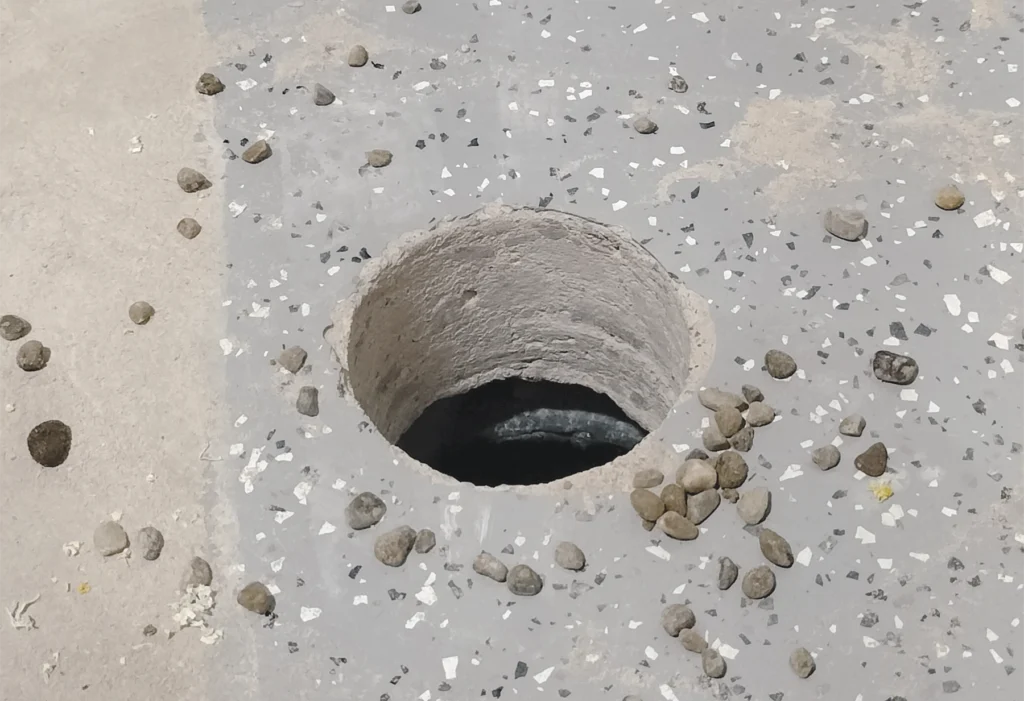
Sealing the easy leaks: We seal obvious slab and cove-joint gaps for more consistent suction.
Sealed collection point(s): We core a hole through the slab to create a suction pit and tie into the sealed, radon-compatible sump lid (when present) to draw from the drain tile path.
Vent piping: Clean, code-compliant routing from the collection point up and out.
Quiet exterior fan: Mounted outside conditioned space (typically exterior wall or attic with outside discharge), pulling soil gas continuously.
Discharge above roofline: Vented away from windows and openings for safe dilution outdoors.
Simple status check: A U-tube manometer on the pipe shows suction at a glance; we can add an audible alarm for extra peace of mind.
Sub-Membrane Depressurization (SMD) for Crawlspaces
Durable membrane: We install and seal a reinforced vapor barrier across the crawlspace floor (and up the walls as needed).
Taped and sealed seams/penetrations: We carefully seal columns, piers, and edges to keep the membrane airtight.
Radon fan & venting: Vent piping and a quiet exterior fan vents above the roofline.
Moisture control pairing: SMD pairs perfectly with crawlspace encapsulation, crawlspace drainage, and dehumidification to manage both radon and moisture.
Sub-Membrane Depressurization (SMD) for Crawlspaces
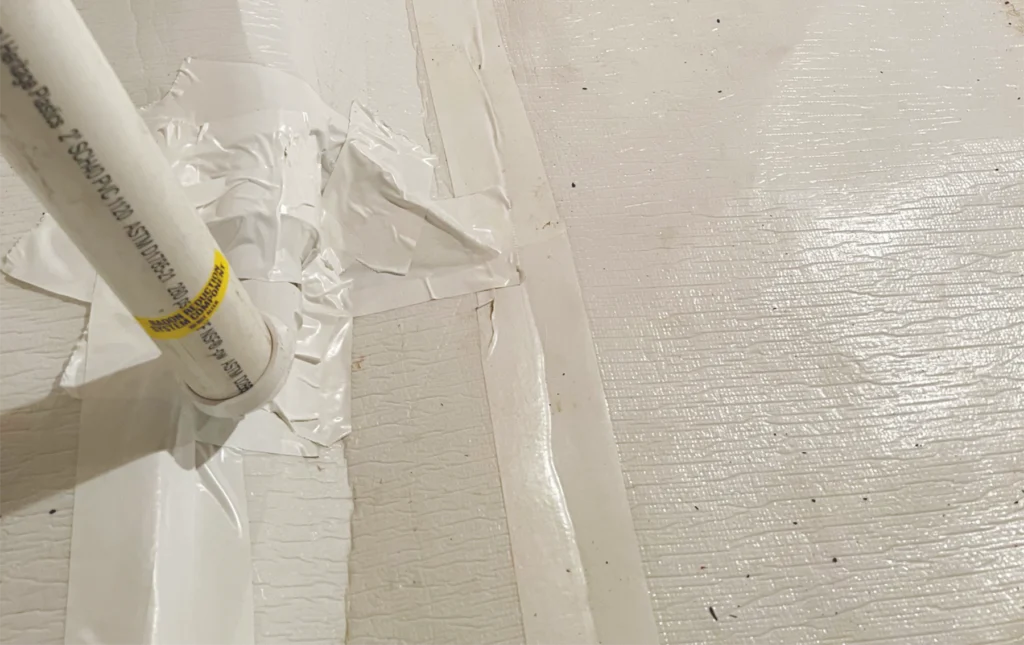
Durable membrane: We install and seal a reinforced vapor barrier across the crawlspace floor (and up the walls as needed).
Taped and sealed seams/penetrations: We carefully seal columns, piers, and edges to keep the membrane airtight.
Radon fan & venting: Vent piping and a quiet exterior fan vents above the roofline.
Moisture control pairing: SMD pairs perfectly with crawlspace encapsulation, crawlspace drainage, and dehumidification to manage both radon and moisture.
Why These Methods Work
Physics, not guesswork: By keeping the pressure slightly lower under the slab or membrane than inside your home, soil gas takes the easiest path into the venting system and safely outside.
Continuous, quiet, low-energy: Fans are efficient and designed to run quietly 24/7.
Verify the drop: After installation, we perform a 48-hour post-mitigation test to confirm results, then advise on periodic re-testing.
Why These Methods Work
Physics, not guesswork: By keeping the pressure slightly lower under the slab or membrane than inside your home, soil gas takes the easiest path into the venting system and safely outside.
Continuous, quiet, low-energy: Fans are efficient and designed to run quietly 24/7.
Verify the drop: After installation, we perform a 48-hour post-mitigation test to confirm results, then advise on periodic re-testing.
Installation Day: Start to Finish
Arrival & Walkthrough
We review the plan, confirm routing (vent path, fan location), lay floor protection, and answer questions before work starts.
Clean, Contained Work
Expect brief coring/drilling noise while we create the suction point. We keep dust down and seal as we go. Exterior routing is neat and low-profile.
Fan, Labels, Safety Checks
We install a quiet, always-on fan, label the system, and set your U-tube manometer so you can easily check suction. If needed, we also add an audible alarm.
Tidy, Finish & Walk-Through
We clean up, show you how to read the manometer, and review how to read and maintain it. You’ll know exactly what was installed and why.
Post-Test & Next Steps
We run a 48-hour verification test under closed-house conditions and share clear results along with re-testing guidance for the future.
Living with Your Radon System: What to Expect
A good mitigation system is “set it and forget it.” Once installed, it works on its own. Add a couple of seasonal check-ins for peace of mind.
Quiet, Always-On Fan
Your exterior radon fan runs 24/7. It's quiet, energy-efficient, and safe to leave on year-round. Don't switch it off.
Simple Status Check (Manometer)
The U-tube gauge on the pipe should show the two liquid levels at different heights. This means the fan is working correctly. If the levels are even, the system is not drawing air. Please call us.
Optional Audible Alarm
If we installed a radon alarm, it will alert you if power is lost or suction drops. Test the alarm button twice a year.
Seasonal Ups & Downs Are Normal
Radon levels can be slightly higher in winter because windows are closed and airflow in your home changes. Your system is built to handle these changes. We still recommend testing your radon levels about every 2 years to track performance.
After Storms or Power Outages
When power returns, the fan will start running again on its own. You might notice a brief increase in radon levels on a follow-up test, but this usually goes back to normal as the system starts working again.
Keep These Areas Clear
Discharge point: Don't block or cap the vent above the roofline.
Exterior fan: Keep leaves/snow off the fan housing; don't paint or cover the intake.
Sump lid (if present): Keep the radon-compatible lid sealed; call us before opening.
If You’re Renovating
Energy & Maintenance
When to Call Radon Control
Manometer levels are equal (no suction)
The alarm sounds and doesn't clear after the power returns
You notice persistent vibration/noise from the fan
You plan foundation, HVAC, or major remodeling work
Let's Look at Your Manometer
Look at the numbers printed next to each column and compare them to the install-day baseline we wrote on your sticker.
What the numbers mean:
Normal (Running):
The liquid levels are uneven/the two sides show different readings. Uneven = suction = the fan is on. You don’t need to chase exact numbers; make sure it looks consistently uneven.
Note: The gauge does not show a radon reading. It’s measuring the fan’s pull (vacuum) on the piping.
Meter reads 0:
If the meter reads 0, make sure the flexible tube at the top is inserted into the pipe and listen for a faint hum from the system running. If the tube is connected and the fan is running, but still reads 0, contact us to diagnose the issue.
Quick checks:
Make sure the fan is plugged in, the switch (if any) is ON, and the GFCI/breaker hasn’t tripped. If power is good and it still reads the same on both sides, call us.
Alarm Beeping (If Installed):
Treat it like “no suction.” Do the quick power checks, then reach out if it persists.
30-Second Seasonal Check:
- Glance at the gauge and compare the reading to your baseline sticker.
- Step outside: make sure the exhaust isn’t blocked.
- Listen for the fan’s gentle hum.
- If anything seems off or the gauge reads the same on both sides, contact us, and we’ll walk you through the next steps.
After Install: Post-Test & Ongoing Re-Testing
Verify the Drop
Once your mitigation system is installed, we run a 48-hour test with your windows closed and normal entry and exit. We set up a continuous monitor on the lowest livable floor, collect it after 48 hours, and send you a simple summary of your average pCi/L result along with the next steps. If the results are not where we want them, we will troubleshoot by sealing more gaps, adjusting the fan, or adding another suction point, and then test again.
Keep It Documented
You’ll receive a recap and lab-verified results you can save for your records or real estate needs.
Re-Test Over Time
First Year
Long Term
Any Construction Changes
Check your U-tube manometer once a month.
If both columns are level at “0,” it means there is no suction. If you hear the alarm, the fan might be off, a breaker could have tripped, or there may be a blockage. If the fan is running and you do not find a blockage, please give us a call.
Frequently Asked Questions
Indiana homeowners ask us these radon mitigation questions every day. Here are some answers to those questions about noise, post-mitigation testing, and more.
What is a radon mitigation system?
A system (and set of steps) designed to reduce indoor radon. The EPA recommends fixing at 4.0 pCi/L or higher.
Do I need testing after installation?
Yes. Do a post-mitigation test (starting after system install) and retest in the future (at least every 2 years and after major home alterations).
How low can mitigation bring levels?
Some systems can reduce radon by up to 99%. With today’s technology, most homes can be reduced to 2.0 pCi/L or below.
How much does mitigation cost?
For most homes, the cost is similar to other common repairs. The typical price is about $1,200, but it can range from around $500 to $2,500 depending on your home’s size, layout, and the method used.
Who should I hire for radon mitigation?
Hire a qualified contractor like Cut ‘N Dry Waterproofing, as radon mitigation requires specialized skills and equipment. Many states license or certify radon professionals, and the EPA also recommends choosing trained, certified providers.
What are "radon-resistant" features (for new builds/renovations)?
These features include a gas-permeable layer, plastic sheeting, sealed openings, a vent pipe to the roof, and a junction box for a future fan. They are simple, affordable, and can also help control other soil gases and moisture.
If my home was built with radon-resistant features, do I still need to test?
Yes. Every home should be tested after people move in, even if it was built with radon-resistant features.
Will the system be noisy or an eyesore?
Systems use a quiet exterior fan with tidy, code-compliant piping; inside, you’ll see a small gauge (manometer) to check suction. An alarm can be added to let you know if the fan stops running.
Still have questions?

Financing Available in Indiana
Protect Your Home without Delay
Radon mitigation doesn’t have to wait. We offer flexible financing from $1,000 to $25,000* with simple monthly plans and quick pre-approvals.
*Other financing options are available for larger projects.
Customer Reviews
Trusted locally since 2007.
Here’s what Indiana homeowners say about working with Radon Control by Cut ‘N Dry Waterproofing team: clear communication, neat installs, and results that stand up to post-test scrutiny.


Note: Some reviews mention our former names, Crawlspace Remediation and Radon Control Services. Both are now part of the Cut ‘N Dry Waterproofing family of services.
Join your neighbors who turned an invisible risk into a non-issue. We’ll handle the details; you keep the peace of mind.
Ready to Make Radon a Non-Issue?
Turn an Invisible Risk into Peace of Mind
Radon is silent, but the fix is simple: test, mitigate if elevated, then verify the drop. We tailor clean, quiet systems to your foundation and follow every install with a 48-hour post-test, so you have numbers you can trust, not scare tactics. Start with a quick professional reading and get a clear plan from our local, education-first team.